Most people come to East Tennessee in the fall to look up.
They come for the red maples, golden hickories and mountain ridges covered in color. I love all of that too, but once mushroom season gets going, I spend a lot more time staring at the ground.
Fall is one of my favorite times to look for mushrooms here. Summer’s heat begins to ease, rain returns after the dry spells, and the forest floor fills with things that weren’t there a few days ago. Mushrooms appear on logs, at the bases of trees, beneath piles of leaves and sometimes right beside trails where hundreds of people walk past without noticing them.
Once you start seeing them, a normal walk in the woods is never normal again.
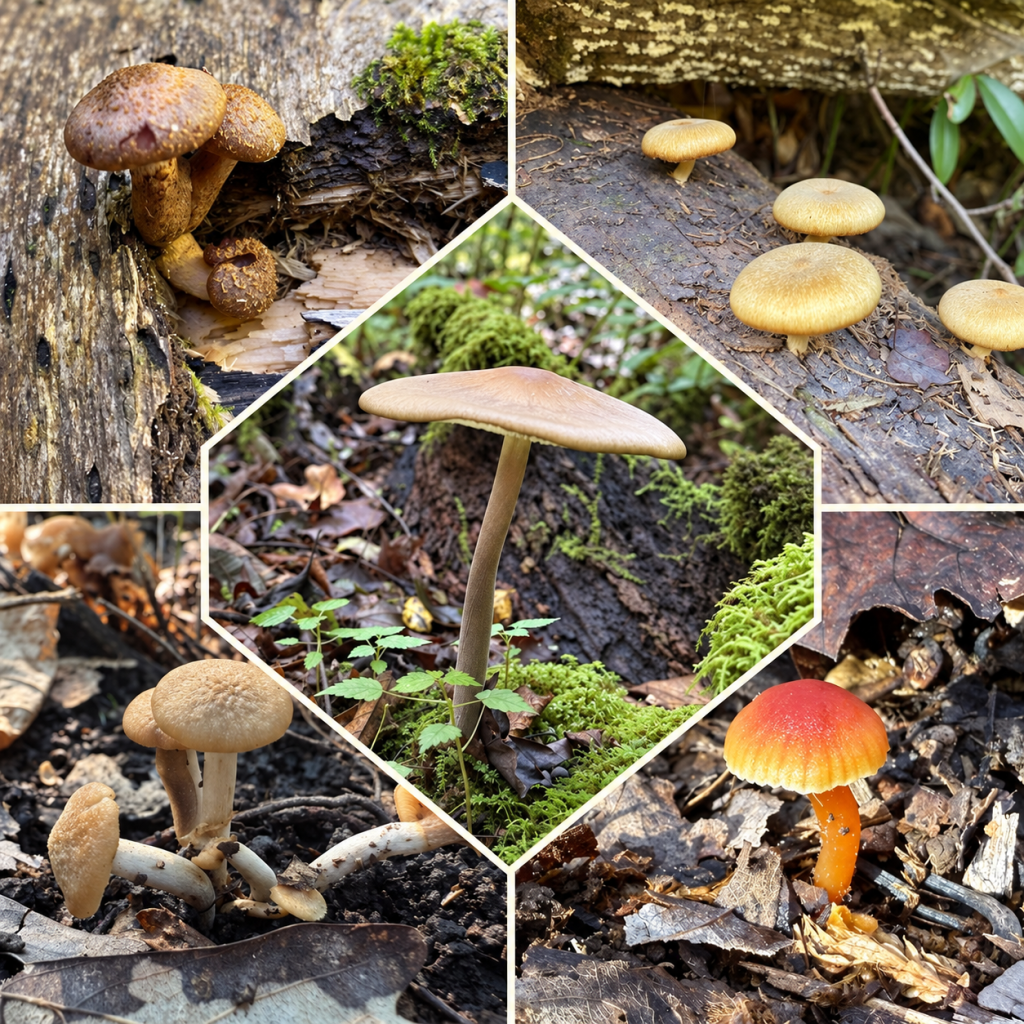
Rain Changes Everything
Mushroom hunting is less about a date on the calendar and more about the weather.
A cool October morning may feel perfect to us, but if it hasn’t rained in weeks, the mushrooms may not be impressed. Give the forest a few soaking rains followed by mild temperatures, though, and everything can change almost overnight.
A trail that seemed empty earlier in the week may suddenly have mushrooms growing from every decaying log. Tiny orange caps appear in the moss. Shelf fungi cover fallen trees. Puffballs push through the leaves. Strange little clubs, cups and coral-shaped fungi show up in places where you would swear there was nothing yesterday.
That unpredictability is part of the fun. You can return to the same trail again and again and never see exactly the same forest twice.
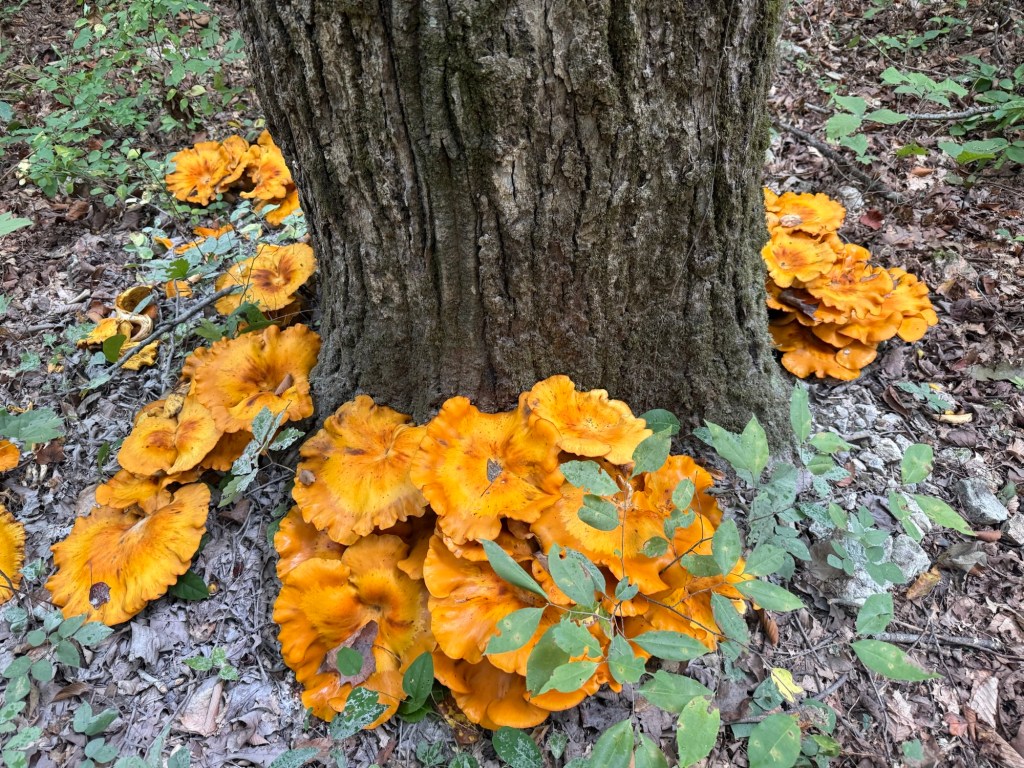
What You Might Find
East Tennessee’s hardwood forests offer plenty to look for during fall. Depending on the weather, location and stage of the season, you might encounter chicken of the woods, hen of the woods, lion’s mane, oyster mushrooms, puffballs, honey mushrooms and dozens of less familiar species.
You may also find mushrooms that look like something edible but aren’t.
That last part matters.
Names and appearances can be misleading. Orange does not automatically mean chicken of the woods. White and round does not automatically mean puffball. A mushroom growing in a cluster on wood is not automatically an oyster mushroom.
Some dangerous mushrooms resemble edible ones closely enough to fool inexperienced foragers. Apps and social-media groups can help narrow down possibilities, but neither should be treated as the final word when someone intends to eat what they found.
I think there is a big difference between mushroom hunting and mushroom eating. You can have a great day searching, photographing and learning without putting a single wild mushroom on your dinner plate.
Start With Curiosity, Not Dinner
When I first became interested in mushrooms, I wanted to know the name of everything immediately.
The forest did not cooperate.
Mushroom identification requires more than taking a picture of the cap. You may need to see the underside, stem, base and surrounding habitat. It can matter whether the mushroom is growing from soil, buried wood or a particular kind of tree. Texture, bruising, smell and spore color may all provide clues.
Even then, the answer might be “probably.”
Mushrooms are good at teaching humility.
Instead of beginning with “Can I eat this?” start with simpler questions:• Is it growing from wood or soil? • Does it have gills, pores, teeth or a smooth underside? • Is it growing alone or in a cluster? • What trees are nearby? • Does it change color when handled? • What does the entire mushroom look like, including the base?
Take several photographs. Include the cap, underside, stem, base and habitat. If you collect a specimen where doing so is permitted, keep different mushrooms separated. A paper bag or waxed paper is usually better than tossing everything into one plastic bag and creating mushroom soup before you get home.
Most importantly, never eat a wild mushroom unless its identity has been confirmed with complete confidence by someone genuinely qualified to identify it.
Look Beyond the Big Ones
The large, colorful mushrooms get most of the attention, but some of my favorite finds are easy to miss.
Tiny mushrooms grow from acorns and twigs. Delicate bonnets rise from rotting leaves. Turkey tails form layered fans along fallen logs. Earth stars open like little woodland sculptures. Coral fungi look as though a piece of the ocean has somehow washed into the mountains.
Then there are the mushrooms that are already past their prime. chewed, fading or collapsing back into the forest floor. They may not be perfect enough for an identification guide, but they are still doing their work.
That is one of the things I love most about fungi. What we see above ground is only the temporary fruiting body. Most of the organism remains hidden in wood or soil as a network of mycelium. The mushroom is a brief appearance from something that may have been living there long before we arrived.
Finding one feels less like discovering an object and more like catching a hidden world in the act of revealing itself.
Where to Look
You do not necessarily need to hike deep into the mountains. Mushrooms can appear in city parks, neighborhood woods, along greenways and even in your own yard.
In the forest, slow down around fallen logs, old stumps, creek bottoms and damp areas with plenty of decaying wood. Check the bases of mature hardwoods. Look on both sides of a log. Walk past it, then turn around. Mushrooms hidden from one direction may be obvious from the other.
Fall leaves make the search more challenging, but also more interesting. A brown mushroom can disappear completely among oak leaves. One flash of purple, red or yellow may lead you to something you would never have noticed while walking at normal hiking speed.
That may be the greatest adjustment mushroom hunting requires: you have to stop trying to get somewhere.
A mile can take an hour. Your hiking partners may abandon you. Your camera roll may become 90 percent fungi. These are all normal symptoms.
Know the Rules Before Collecting
Rules for gathering mushrooms vary depending on who manages the land. National parks, state parks, wildlife areas, forests and private properties may all have different regulations, and rules can change.
Never assume that finding a mushroom means you are allowed to take it. Check the current regulations for the exact property before collecting anything. When gathering is permitted, take only what you can use and leave plenty behind for wildlife, other visitors and the continued life cycle of the fungus.
Photography is allowed in far more places than harvesting, and the mushroom does not need to come home with you for the encounter to matter.
The Other Side of Fall
East Tennessee’s fall color is spectacular, but it isn’t limited to the trees.
It is beneath them too.
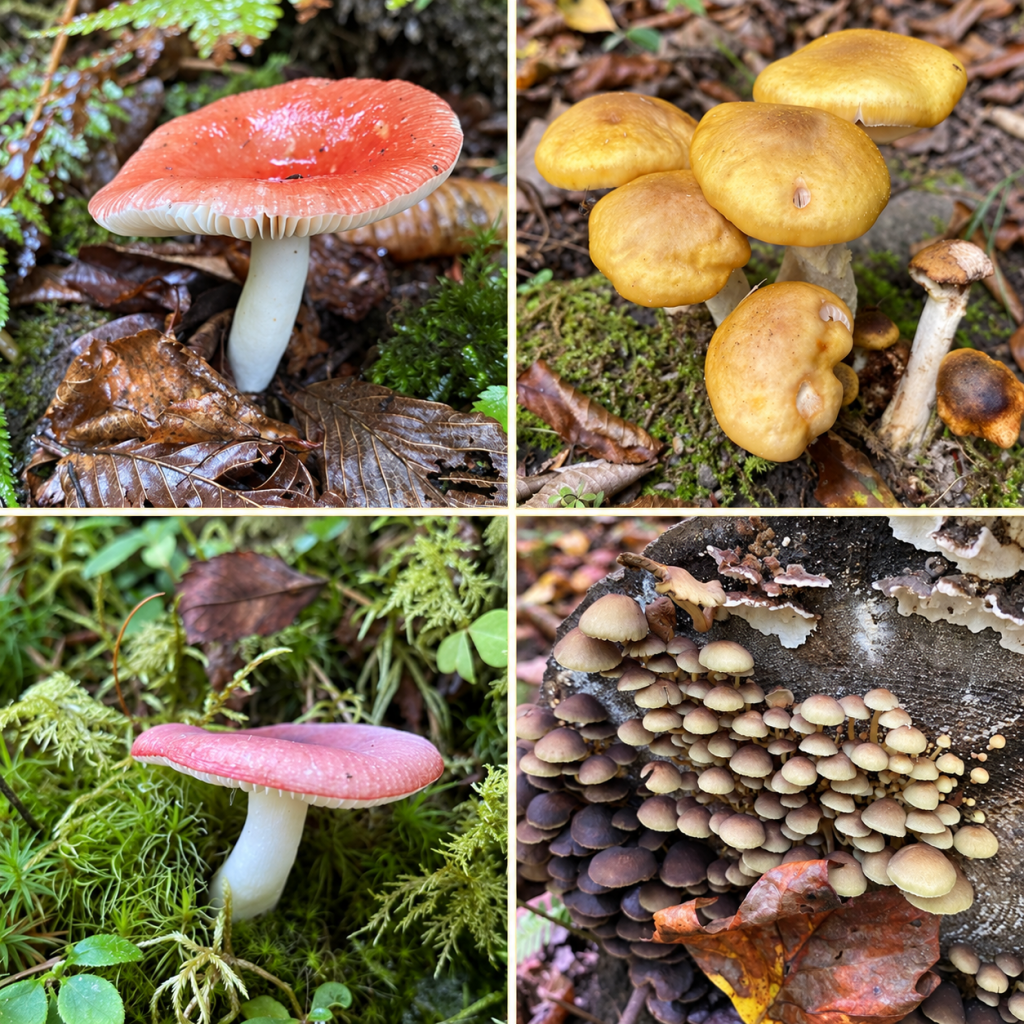
It’s in the orange shelves growing from an old oak, the violet mushroom hiding under wet leaves and the tiny white caps scattered across a moss-covered log. It’s in the strange shapes that appear after rain and disappear before most people ever know they were there.
Mushroom hunting has made me a slower hiker. I stop more. I wander off mentally, even when I stay on the trail physically. I pay attention to rotting wood, damp soil and all the small things happening below the grand mountain views.
I still look up at the leaves.
I just know now that the forest is putting on another show at ground level. and sometimes that is where the best fall color is hiding.
 Andy's walks in the world
Gorgeous finds!
LikeLiked by 1 person